
Chapter 30: Bichos
My Family and Other Animals

It was market day in Amarante. Cars lined the streets, which were full of people from the outlying areas; farmers in felt hats, shopkeepers, and shoppers looking for farming equipment, ceramic pots, plants, household goods and bargains.
Suddenly I saw a tiny soft-furred field mouse running frantically under a car, around the wheels and back again. A farmer, with his big working boots, was trying to stomp on it.
I cried out, and stood, staring, horrified.
Luís steered me forward.
“We have to stop him!” I cried. “Why is he doing that?”
“He doesn’t see the mouse as a pet. From his perspective, it’s him or the mouse. It’s about survival.”
It wasn’t the first time I had cried over a mouse. When my parents were building their extension, they discovered a mouse hole under the land which was about to be filled with concrete. They put poison out for the mouse. I watched from behind the shed as it emerged from the hole to nibble at the deadly substance, my face wet with tears.
“It’s better than letting it die under the concrete,” my mum reasoned.
I willed it to run away, then cried myself to sleep when it didn’t.
“So it’s not just the Portuguese who do this,” said Luís when I told him.
“But we don’t tie up our dogs like you do.”
“They have an important function. Rural people don’t see them as pets. Anyway, in the UK you care more about animals than you do children!”
He looked at the British newspaper I had bought at the airport and laughed at a headline on the second page.
“Woman leaves fortune to pet poodle”
On the opposite page was a story of a toddler who had been left alone at home while her mother went on holiday.
“You see? I can’t imagine that happening in Portugal.” And he laughed again.
In front of our flat, our landlord’s dogs were chained to a longer chain that ran across the front of the house. They had a concrete shelter from the sun and water. They barked all day and all night. Rui’s aunt had a huge friendly dog who was tied up at the entrance too. I couldn’t imagine how he could guard anything. Desperate for attention, he would jump up at anyone and lick them to death. Desperately sorry for him, I would stop to make a fuss. Poor Bolinhas.
However, some were not tied up at all, and left to take themselves for walks. It was rare to see dogs on leads.
In the UK, it was rare to see dogs without leads. Even children had them.
My mum used them with us when we were young. One in the pram, one on the seat on top, my brother on a lead attached to a harness on the pram handle, while my sister and I held hands, until I wrestled free from her grip. She always held on too tightly, controlling me.
I had a lead for Cathy.
She was an exploding ball of energy, a whirling dervish, a Tasmanian devil. She would slip out of my hand and race ahead, then veer suddenly into the road. Cars would screech to a halt.
So I bought her a rein and attached it to her wrist. I stopped using the harness after a week.
“They think you are treating her like a dog.” Luís explained. “It’s very shocking here in Portugal.”
But the rein on her wrist stopped her from dying like the cats and dogs that we saw splayed out over the asphalt.
So I bought her a rein and attached it to her wrist. I stopped using the harness after a week.
“They think you are treating her like a dog.” Luís explained. “It’s very shocking here in Portugal.”
But the rein on her wrist stopped her from dying like the cats and dogs that we saw splayed out over the asphalt.
One day, I took Cathy for a walk in the nearby country lanes. As there were no cars, I could let her off her rein and let her run, but calling to her.
“No Cathy… don’t go into that stream… Cathy, come back now… Cathy. Don’t touch that, it’s dirty. Not in that tall grass, there are snakes.”
After a while, a woman waddled along the dirt track and stopped.
“Bom dia minha senhora.”
“Bom dia.”
“É a esposa de doutor Luís, não é? You’re Doctor Luís’s wife, aren’t you?”
“I am.”
“And this is Doctor Luís’s daughter?”
“She is.”
She turned to Cathy.
“Hello little girl. Look what I’ve got here.” And she pointed to a low stone barn to our right. There was a single wooden stable door. She opened the top half, to reveal a bullock lowing in the darkness.
I picked Cathy up.
“Look, Cathy, a moo-cow.”
Cathy looked, fascinated.
“Do you know what I am going to do tomorrow?” continued the woman, smiling. “I’m going to get a great big knife and cut his throat from here to here.” She drew a finger across her neck.
I looked at Cathy. She didn’t seem to have understood. It was time to go.
“I like killing animals” continued the woman, as I turned. “My neighbours bring me their rabbits and chickens…”
“Good morning. We have to go.”
Many of our neighbours killed their own animals, but none of them relished it.
“She’s nuts!” said my friend Rosário when I told her later.
Whenever we went away, it was Rosário who looked after the cat that had adopted us. But when Honey-cat was killed on the road one day, it was another neighbour who told me.
“You’re looking for your bicho?”
Bicho? Honey-cat?
Bicho was the word for any living creature. Bugs, animals, beasts, viruses.
“I think I saw it last week. It’s dead.”
It.
I found Honey-cat’s collar and just a few strands of fur by the side of the road.
“Anyway, you’re wrong to think that Portuguese don’t care about their animals.” Luís said. “They’re an important investment.”
Once a month, on Thursdays, farmers would gather by the old bridge with their horses, dogs, and goats and wait their turn to see the only vet for miles around. A major expense for rural people back then. This vet refused to sterilise cats and dogs.
“Why?”
“I don’t know. I think he believes they have the right to reproduce. I think he’s very Catholic.”
When it wasn’t the week for the vet, if the animal was ill, there was little they could do.
Still.
One day, Luís was visiting an old lady who was dying. Her husband turned to Luís and said.
“Oh, doctor. While you are here, can you see my pig?”
“I’m a doctor, I can’t treat your pig.”
“Oh, please doctor. The vet won’t be back for another three weeks. I’m so afraid that my pig will die,” he begged, with tears in his eyes.
So Luís saw the pig, prescribed him some antibiotics, and went away.
He told me when he got home.
“I didn’t know what to do. Animals are very important for agricultural people. A major investment.”
A few weeks passed.
We were walking through the town when we came upon the man, who ran up to Luís. He looked happy.
“How is your wife?” Luís enquired.
“My wife? Oh, she died. But my pig? She’s doing wonderfully!”
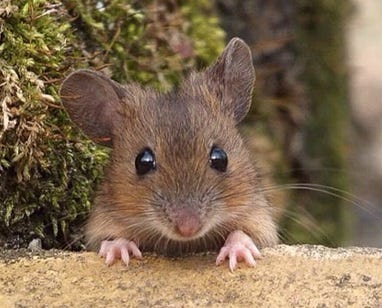
Mouse photo from https://www.voiceforwildlife.com/single-post/2016/02/29/field-mouse
In the aftermath of the Pedrogão fires, many volunteers who had come from the city to help found it hard to understand the desperation of the farmers who were begging for feed for their animals.
That was when I realised that we had truly changed, because our connection to farm animals had been lost, replaced by a connection to pets.
As always, thank you for sharing of your life, and of life here. I admire your courage and endurance, adapting to life in Portugal.