
Chapter 23: Invisible Death
What happens to grief when you live elsewhere

“A very forward baby” my grandmother drawled.
All grandma’s great grandchildren were forward babies. We knew that. But somehow I still loved it when she said it. She was delighted with Catherine, who gurgled at my grandmother for the first time, fixing her in a steady gaze before producing a milky belch. My grandmother laughed, a short, cracked sound that tipped into a cough she tried to suppress.
I photographed them then, in that dreary English spring, grandma in her best red dress, sitting upright despite the effort it cost her, Catherine on her lap. One for a shelf back in Portugal.
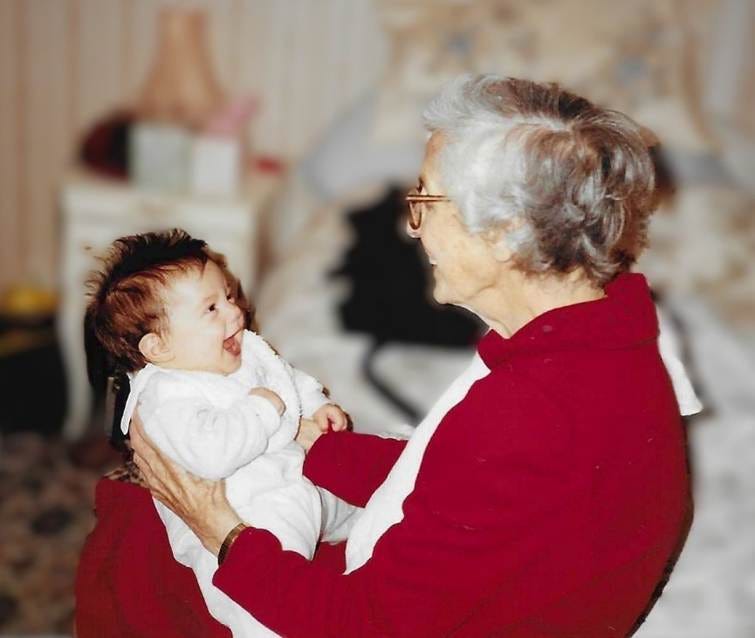
She’d been a smoker all her life, ill for a year. This was one of her better days, my aunt said. She would know. She cared for her day and night.
Grandma even ate a little that day.
The conversation was light. No-one mentioned her illness.
I didn’t cry when we left, although I didn’t know if I would see her again. Grandma, especially, didn’t care for displays of emotion.
I made a joke. She laughed, then coughed.
I took Catherine back to Portugal.
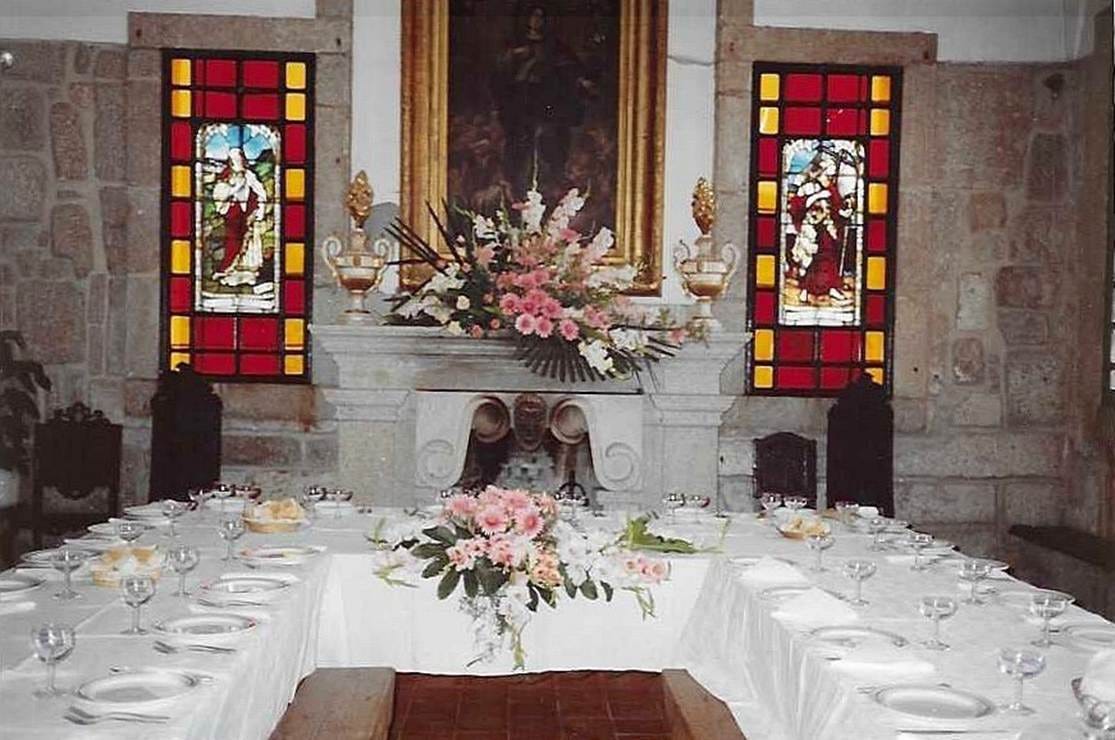
We had a baptism for fifty to prepare; a feast in an ancient convent overlooking the Douro. Not a cup of tea and a piece of cake, I told my sisters.
They booked their flights. It was all set for June.
In Abrantes, cousin Pedro tried to unlock his grandfather’s door. There was a key in the lock on the other side. So he rang the bell. Then knocked.
No answer.
He wasn’t worried. His grandfather was fit, active, and probably writing another newspaper article. The key in the lock was the sign that he was busy.
The next morning, they broke down the door and found him lying on the floor. The room still held the shape of his life: his books were open on the desk, a pen uncapped.
When Luís got the phone call, he went somewhere quiet and cried alone. He didn’t want any comfort. But we packed immediately and left the same day.
When we arrived, his grandfather had already been moved to the old chapel in the centre of town.
Maria Beatriz was waiting for us, with her cousin Constança. She had been ill for some time, but now was leaning quietly against the chair, her body held together more by will than strength. Her skin had thinned, almost translucent. At the beginning of my pregnancy, she had phoned my mother-in-law frequently, complaining of her stomach problems.
I changed, ready to go to the chapel. Maria Beatriz looked at me in horror.
“You can’t go like that!”
“Like what?”
“People will be shocked. Upset.”
I looked down at my black dress and shoes, and frowned. She pointed at the dark orange T. shirt that was just visible under the dress. A nice contrast, I thought. But I changed.
“Why does it matter?”
“It’s the formality of things here. It’s not about you, it’s about what people expect.”
We walked across the cobbled town streets between whitewashed houses, to the small white chapel. People were spilling out of the old wooden doors, down the steps, leaning on the handrail. Gossiping.
“Estava rijo que nem um pêro -as fit as a fiddle.”
“He still went for a walk every day. Had coffee with us. Estranhei-me hoje quando não apareceu.”
“Since his wife died, he was never the same.”
“He took care of her all his life. Then after…”
We had to greet everyone, with a kiss, hug or a handshake. Condolences were given, even to me, in hushed tones.
In the centre of the dark chapel, encased in white silk, lay a waxen figure that had once been Luís’ grandfather.
His aunt Augusta bent her teary face over the coffin, stroking his face, and periodically kissing it. His male cousins and brothers-in-law were standing, solemnly, arms behind their besuited backs. His sisters, aunts, cousins, friends were sitting on wooden chairs to the right.
I sat with the womenfolk, sometimes silently, sometimes talking. Sometimes even joking, lightly, in soft voices. Cousin Constança was with them, looking pale.
I looked at my watch. It was six O’clock. It was going to be a long night. Maria Beatriz would stay with her father all night long, while the others agreed to shifts. As a nursing mother, I would not be expected to stay. Luís wanted to keep his mother company.
“Não vale pena!” she insisted.
They argued for a while, but Luís stayed. He stayed even though he was already tired, even though the next day he would drive home, even though he would be working the day after.
“I’m not going to leave my mother alone all night.” He told me.
The next day, everyone followed the hearse in a slow procession to the church in Vila de Rei, his hometown thirty kilometres away. There was a mass, then another slow procession of a hundred people, walking this time, to the cemetery where the jazigo de família Lopes had stood for the past hundred years.
At the cemetery, I was surrounded by cousins I had met at the grandmother’s funeral the previous year. They told me I was their cousin now. I had more cousins in Portugal than I had in England.
The cemetery emptied slowly. No one suggested going anywhere. No gathering, no food, no drink.
Catherine’s baptism the following week was the same day as the missa de sétimo dia. Instead of fifty people, there were now only thirty-five. Maria Beatriz was there, but not her sisters, some of the cousins, nephews and nieces.
Later that year, I went back to England. Grandma looked shrunken and brittle. Quieter. She held Catherine again, and I reached for the camera.
“The time for photographs has passed,” she said.
I kissed her gently. I didn’t look back.
Maria Beatriz was with me when I got the phone call a few weeks later. I knew before my mother spoke.
I cried alone. Luís thought I needed space.
“No, I need your shoulder.”
He put his arm round me and patted my back, awkwardly.
The next day, we went to Abrantes. Cousin Constança was now in hospital.
We visited my sister-in-law Ana Maria first, who talked excitedly about her children and plans with her mother. After a while, she said,
“You’re very quiet today, Teresinha. O que se passa?”
“My grandmother has just died.”
“É verdade!” Maria Beatriz remembered.
She would normally phone the whole family when any cousin, or friend, or parents of a friend, died. My grandmother was invisible here.
We visited cousin Constança the next day. Maria Beatriz didn’t leave her side. Her funeral, six weeks later, coincided with my grandmother’s, two thousand kilometres away.
I couldn’t afford to go.
Luís reached for my hand.
When my tears fell at Constança’s funeral, it was my grandmother I was remembering.
You have put your finger on it: the invisibility. For me, it was less so when I was in the village in 2015 when my father died in Australia . I had Masses said for him and wore mourning and gave bread to those closest to me, as is the custom around here. Yet when my mother died in Australia last year in August, the only thing I could cling to was that ot was the same priest, now in Faro, who said the Masses. At least *he* knew me. When I told a few neighbours, "My mother died yesterday", a couple of them actually did not hear it the first time. I made sure they heard it the second time, after telling me all their news. Momentary chagrin on their part, a frown, and muttered condolences was all. I was not looking for sympathy; I merely had to declare it so out loud. I was somewhat astounded at the initial lack of comprehension of some of my interlocutors, though.
I had a lump in my throat reading this: the photo of my grandmother holding her infant great-grandson (who was named for her late husband, my beloved grandfather) has pride of place in our family gallery. Gran died a year later, and I couldn’t afford to fly back for her funeral.