
Chapter 15: Mirrors
Lisbon 1989

My alarm rang. 7:30 a.m. There was no window, but yellow daylight crept in through the cracks around the perimeter of the door. I was already sweating in the narrow wooden bed. A child’s bed.
In the ensuite bathroom, I edged round to the shower cube and turned on the tap, hoping for cool water. I emerged wet but still sweating, and towelled myself into a cotton dress.
I opened the door, a crack. He was already standing outside, waiting. Chiquinho.
“Teresa.”
He called me as soon as he saw me.
“Teresa. Vais contar-me outra história?”
(Are you going to tell me a story?)
He was half naked, with callipers on his thin, wasted legs. Seven years old, and he had already had many operations.
“Not now, Chiquinho. I have to go to school.”
I looked at the window. Perhaps I could open it a little. Let in some fresh air. I walked towards it.
Too slow, too late. Milena appeared.
“Good morning. Did you sleep well?” Then she saw where I was looking. “I’m so sorry. I can’t risk Chiquinho getting ill from a draught. Draughts are very dangerous, you know.”
I already knew. And wet feet, wet hair, cold water, eating a banana after drinking milk.
“Would you like some breakfast?”
“No, thank you. I’d better head to the school.” I would have breakfast in a café. Somewhere cool. Outside was cooler than this flat.
I escaped down the narrow marble stairwell into the tree-lined street outside. I could breathe again!
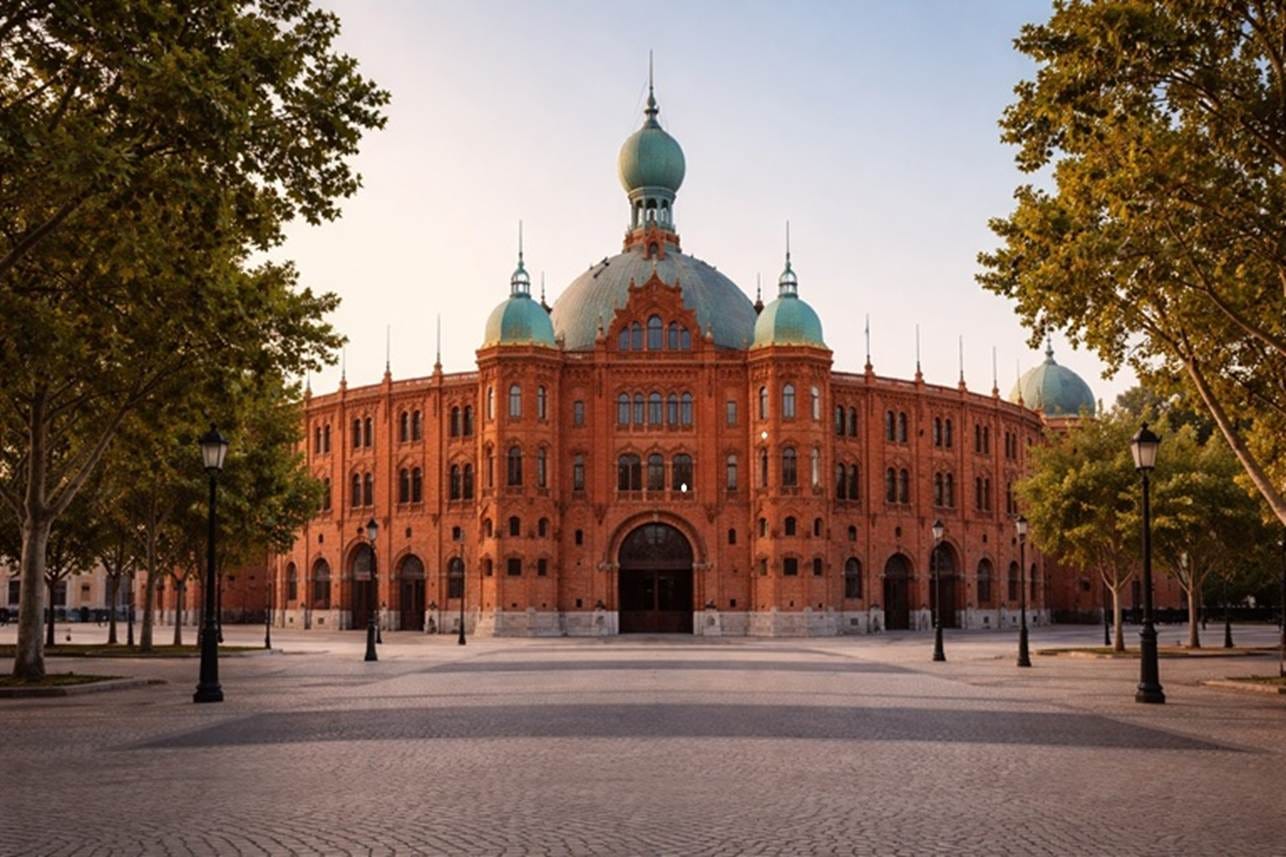
It was a half-hour walk to the school, past the red brick Campo Pequeno Bullring, along wide avenues lined with large plane trees. A gentle breeze wafted in from the Atlantic before the later heat.
It was a kaleidoscope of belonging: Portuguese voices all around me, the bustle of a city reminiscent of London.
And then there was the school. Surrounded by English people again, back in a classroom, ready to learn how to teach English. Several had come because of a Portuguese boyfriend or girlfriend. Suddenly, everything was easy. Long, lonely days in the countryside were already distant memories.
My hours were now filled with learning theory, jazz chants and phonetic transcriptions. We dreamed up games, wrote role play cards and discussed how to teach grammar communicatively. We lunched in local cafés and laughed over beer.
I made new friends. Christine, who now lived in Cascais, Ian, a black American with a girlfriend from Angola. He said that I was wrong to think that Portugal wasn’t really racist. Three months later, Ian’s Angolan girlfriend was killed in a police raid on their compound.
We taught students in teams. Lucy, an older trainee, was confused about grammar.
“What is present perfect?” she wailed. “And why is it present, and what is perfect about it?” We explained, but her face grew tight and red, and rivulets of tears wet her cheeks.
Christine’s father-in-law knew my father-in-law in Africa. Such a sad story, she said. Such a tragedy. I only had the vaguest notion why. But I nodded my head. I would ask Luis.
In the early evening, I walked back towards Campo Pequeno, to my husband’s cousins in the dark, stuffy flat.
“Teresa.”
Chiquinho was waiting for me at the top of the stairs, while Milena remonstrated with him.
“Chiquinho! Podes cair! Entra antes que te apanhe um frio!”
I bounded up the steps to wrap him in a hug, and promise him a story.
Milena’s husband João Pedro was home already. We’d be dining out that night. I relaxed. A few more hours of fresh air before my nightly confinement in the sweaty bedroom. Yet I was comfortable, in this Portuguese family that now called me one of them. I didn’t understand everything yet, and when I didn’t, they repeated all the words that I knew and not the one that I didn’t.
“A (coisa) era tão grande que não sabia o que podia fazer”
(The (thing) was so big that I didn’t know what to do.)
“What was big?”
“Grande!” they repeated, opening their arms wide.
At the weekends, I went back to my mother-in-law’s house in Abrantes, just an hour by train to Entroncamento, then she would pick me up by car. Every Sunday I would return again, with expensive gifts for the family.
Milena protested.
“No, it is not necessary! Teresa promise me that you will not bring more gifts!”
But every weekend, Maria Beatriz would send me back with more.
I was the go-between for a cypher I didn’t comprehend.
At the school, we were assessed on our new teaching skills. Each team member had a part. Lucy didn’t come. She didn’t warn anyone.
“I am an empath” she had told us. “I feel other people’s pain deeply.”
Not ours. We reinvented her part of the lesson for the assessment, and all passed.
Back at the flat in Campo Pequeno, Chiquinho was crying.
“I don’t want you to go!”
“I’ll be back, Chiquinho.”
Even thirty years later he would telephone me. “Teresa.”
Finally, it was time to go. I caught a taxi to the station, lugging my bulging suitcase.
“Estação de Santa Apolónia,” I said, confidently.
The driver pulled away and began chatting.
“Que dia de calor. What a hot day.”
“Pois é.”
He glanced at me in the mirror.
“You’re not from around here, are you?”
“Não, sou inglesa. I’m English… but I live in Marco de Canaveses.”
He slammed on the brakes with a screech, his eyes bright.
“Marco de Canaveses? Don’t tell me! It’s my hometown!”
He twisted round in his seat, already pulling photographs from his wallet, eager to show me his family and the house he’d left behind.
I looked nervously at my watch. My train was due soon.
It was a month of mirrors.
In Lisbon, I saw London. At school, I saw my countrymen, and a shadow of my late father-in-law. And in the taxi, the driver saw his own homeland.
Now mine. And I was going back.
you are not really going back??